The Science Behind GrimaceTracker
Understanding pain in laboratory animals through AI-assisted analysis of facial expressions
The Mouse Grimace Scale
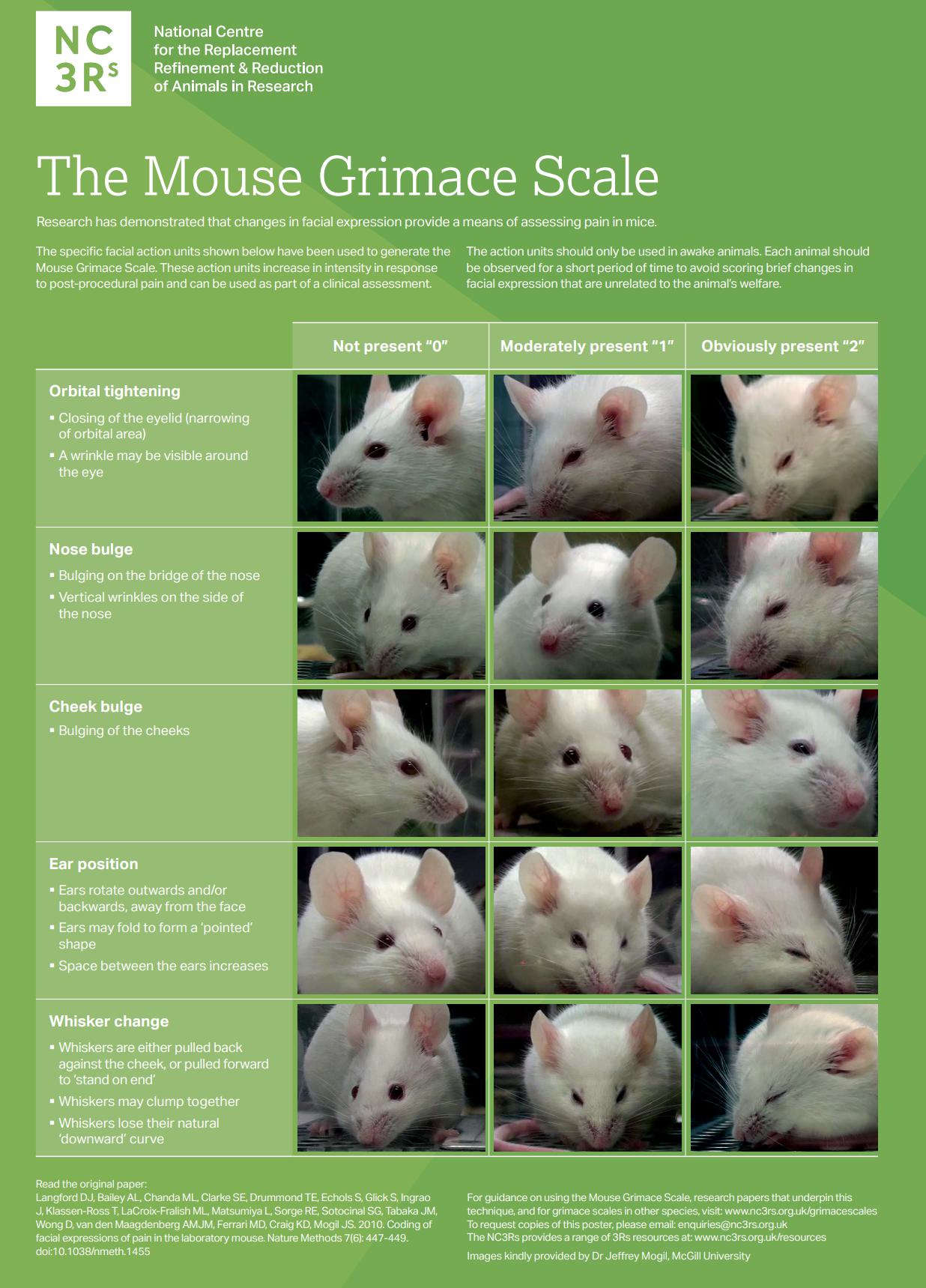
The Mouse Grimace Scale (MGS) is a scientifically established method for assessing pain in rodents by evaluating facial expressions. It examines five facial action units:
- Orbital tightening
- Nose bulge
- Cheek bulge
- Ear position
- Whisker change
Each unit is scored 0-2, producing a standardised pain assessment score that helps researchers monitor animal welfare in a comparable way across observers and studies.
The MGS itself was described and validated in the scientific literature (Langford et al., Nature Methods, 2010). GrimaceTracker implements this scale; the scale's validation does not constitute a validation of our software.
Our AI Technology
Deep Learning
Neural networks trained on several thousand annotated rodent facial images to support pain detection and classification
Computer Vision
Image processing that locates and analyses the relevant facial features during recording
Real-Time Processing
Algorithms running on cloud infrastructure, so results are available immediately after a recording
How It Works
Simple 4-step workflow from project creation to documentation
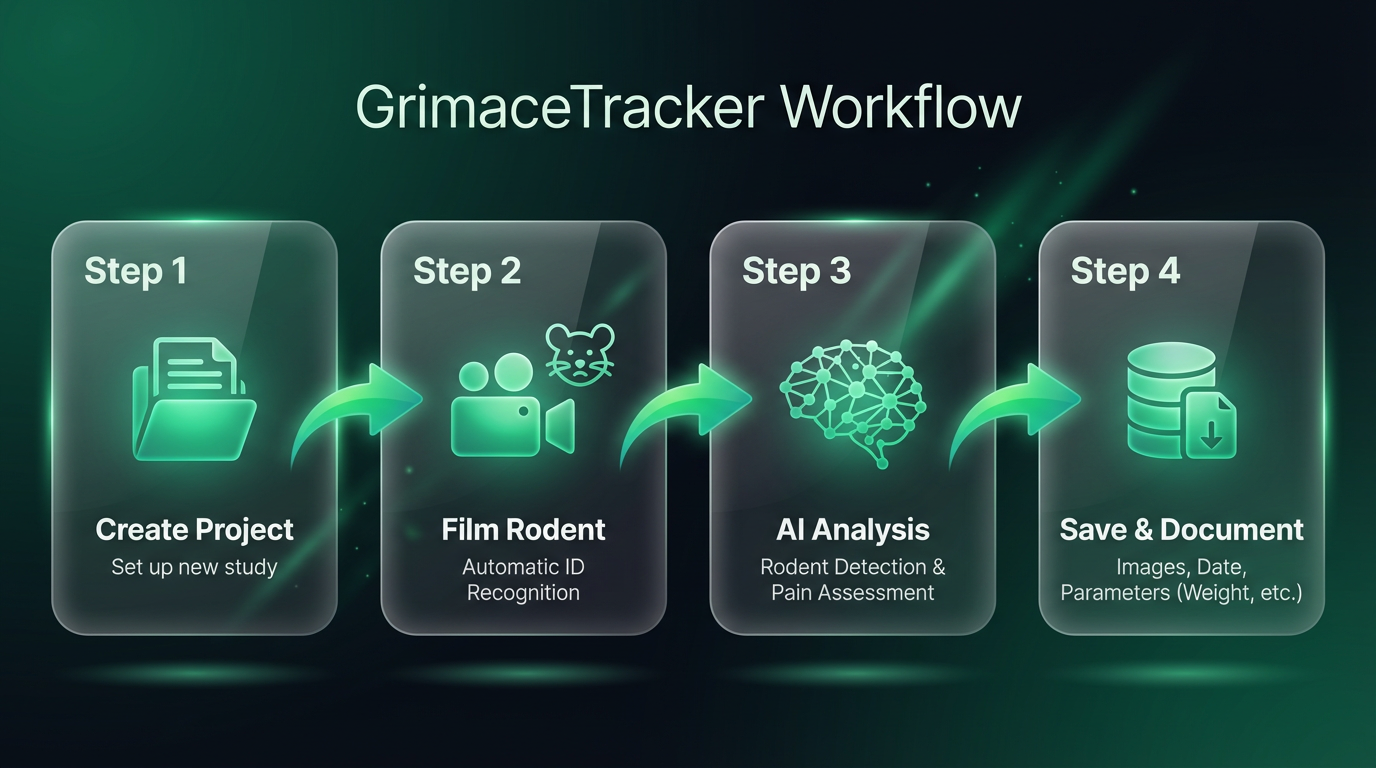
Create Project
Film Rodent
AI Analysis
Save & Document
Research Cooperation
GrimaceTracker is developed in cooperation with the Fraunhofer Institut für Zelltherapie und Immunologie (IZI) in Leipzig, Germany. This collaboration helps us align our technology with current scientific standards in animal welfare research. Our joint aim is to improve the quality of research while reducing animal suffering through standardised, automated pain assessment.
Intended use and limitations
GrimaceTracker is a decision-support tool for scientific research. It supports the documentation and standardisation of pain assessments; it does not make any autonomous decisions about animals. Every result must be reviewed by appropriately qualified personnel.
GrimaceTracker does not replace the assessment by a veterinarian or by the animal welfare officer, nor any obligation arising from animal welfare legislation or from the conditions of an approved animal experiment. It is not a medical device and is not intended for use on humans.
The accuracy of the analysis depends on recording conditions such as image quality, lighting, camera angle and the animal's strain. We are happy to provide performance figures for defined test conditions on request.